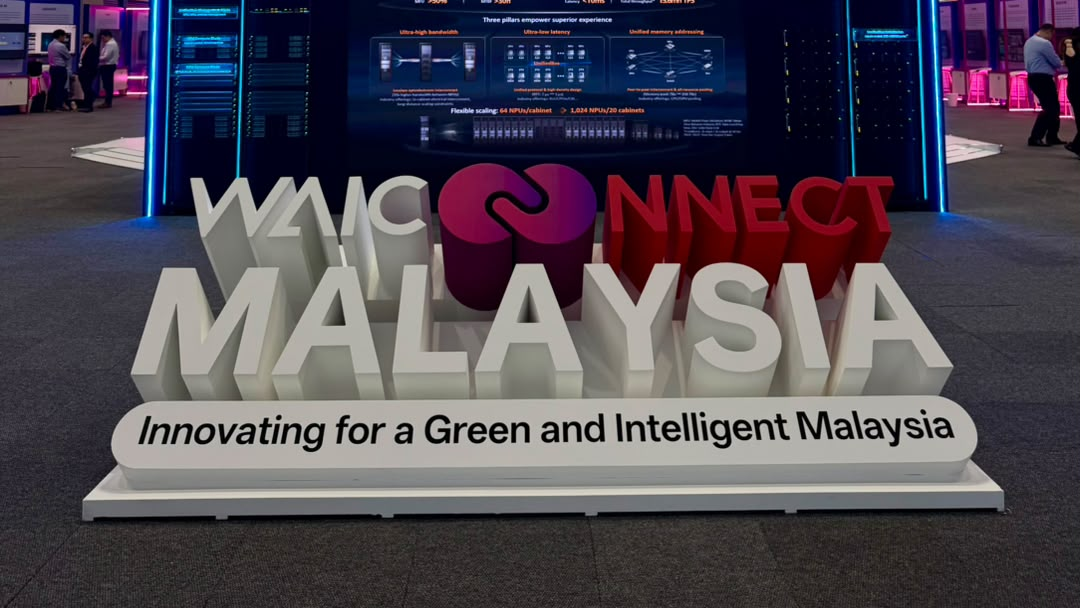
We spent two days at an enterprise AI summit in Kuala Lumpur, mostly listening.
The real movement was on stage, not on the floor. A senior operations leader at a regional bank explained why his own bank's early AI work had underdelivered. He did not name the models or the vendors. He named process redesign.
What had failed, in his telling, was never the technology or the budget. It was the sequence in which the work was done.
The diagnosis is no longer the differentiator
Sit through enough of these sessions and the same three failure patterns surface, described from the customer side now rather than the pitch side.
AI bolted to isolated steps. A model gets dropped into one task inside a workflow nobody re-architected. The step gets faster. The process does not, because the constraint was three handoffs downstream. The demo looks impressive and the cycle time barely moves.
Assistants layered over friction they never touch. An assistant sits on top of a process built around workarounds. It helps a person move faster through work that should not exist.
Data quality patched at go-live. The data problem gets discovered in the final weeks and patched by hand, rather than designed for from the baseline. The pilot ships. The debt stays.
Three research findings land on the same point.
BCG, in its June 2026 report "AI-First Enterprise Operations: Reinventing the Operating System of Work," found cost reductions of 60% or more, but only with end-to-end redesign, against 10% to 20% for the waves that left the operating system untouched. That contrast is the number worth remembering.
MIT Media Lab's Project NANDA, in its July 2025 study "The GenAI Divide," found that roughly 95% of enterprise generative AI pilots produced no measurable P&L impact.
McKinsey, in its March 2025 report "The state of AI: How organizations are rewiring to capture value," tested 25 attributes and found that workflow redesign had the biggest effect on gen AI's EBIT impact. Only 21% of organisations had actually done it.
Two years ago this was a vendor argument. Now the customer makes it from the main stage, unprompted. The argument is won. The problem has moved.
The principle everyone agrees with, and nobody staffs
State the corrective principle plainly: simplify first, then introduce AI only where it measurably improves the outcome. Every operations leader we have spoken to agrees. It is on the slides, in the keynotes, and in the strategy decks. The agreement is total, and on its own it is worth very little.
Ask the follow-up question. Who does the simplifying?
Ownership is split. A single process has four owners with four different definitions of done. Nobody can redesign what nobody fully controls.
The current state is undocumented. The process is written down in seven or more places, none of them authoritative, and the version that actually runs is an undocumented workaround. Before anyone can simplify, someone has to map the process as it truly operates. That mapping is the first bottleneck, and it is exactly where AI process mapping starts to change the arithmetic.
The skill is scarce and already spoken for. Redesign needs trained Lean and Six Sigma practitioners. Most banks have a handful, and they are already allocated to whoever has the loudest sponsor.
The arithmetic closes it. Thirty candidate use cases against four qualified practitioners means two processes get redesigned this year. The rest get automated exactly as they stand. Automating a process you have not simplified does not remove the waste. It encodes the waste at machine speed and files the result as a delivered project.
"Simplify first" survives as a principle and dies as a schedule. Nobody abandons it out loud. It quietly loses to arithmetic in the third planning meeting, when the redesign queue is longer than the calendar.
The problem is capacity, not conviction
Give the room its due. A bank stating the principle from the main stage is ahead of a bank still buying assistants for undocumented workflows. The conviction is real, and it is new.
But conviction does not map a process, and it does not redesign one. The live problem is capacity: process engineering that scales past the number of Black Belts a bank can hire. That is the subject of part 2, which looks at what is actually missing and how AI process mapping resources the redesign at the pace the use-case inventory demands.
If you want to test the sequence on something real before then, bring one process from your grid. We will baseline it and show you the redesign, plus the AI use cases that fall out of it, in a single session.
Book a demo on your process. Your actual workflow. No hypothetical use case required. Start at https://apac.essam.ai/contact.
Related reading: