01
Vs. diagramming tools
They draw the picture and stop. ESSAM scores the process and tells you exactly what to change.
ESSAM captures how your business actually works, pinpoints where you're losing time and money, and identifies the AI use cases that will deliver the biggest wins drawn from your real process data, not generic advice.
Your board wants an AI plan. Your team has tools that can automate almost anything and no clear answer on what's actually worth automating.
Meanwhile the real costs hide in plain sight:
You can't fix a process you can't see and you can't point AI at one either.
Most tools stop at a diagram. Consultants stop at a slide deck. ESSAM keeps going.
For every process you map, ESSAM identifies the specific AI use cases that will move the needle.
You walk away knowing where to point AI first, and what it's worth.
The answer enterprises pay $500K and wait 8–12 weeks for from your own process data.
Watch the portrait walkthrough while you continue exploring the site. Start it here, then keep scrolling and the demo stays available as a compact ongoing view.
Portrait walkthrough, no landscape crop.
Keeps playing while the page stays navigable.
Dismiss anytime without interrupting the site.
Start with how the work really happens. Finish with a ranked AI roadmap, boardroom-ready documents, and a process your team can use.
Describe the process in a chat, or say it out loud. ESSAM structures the stakeholders, steps, inputs, and dependencies into a clean map. No flowchart software. No BPMN training. Cuts documentation time by 80%.
ESSAM scores the process against Lean Six Sigma standards cycle time, value-adding work, overall efficiency and classifies every step: Eliminate, Simplify, Standardize, Automate, or Migrate.
Below the analysis, ESSAM surfaces the high-impact AI opportunities hiding in the process ranked by impact and tied to the step they transform.
Generate boardroom-ready SOPs and a clear before-and-after case for change. Deploy the answers on Teams or WhatsApp, collect feedback, and improve on a loop.
From the first process conversation to staff deployment and continuous feedback. ESSAM handles every step without a separate tool for each.
They draw the picture and stop. ESSAM scores the process and tells you exactly what to change.
They map and monitor after months of setup and a specialist team. ESSAM delivers in a session and shows you where AI actually pays off.
They hand you a slide deck in month three. ESSAM delivers the same answer from your real data in a session and keeps working every week after.
Those tools can run AI but they can't tell you what to point it at. ESSAM reads your real processes and hands them the high-impact use cases. Use both.
ESSAM works with your Lean Six Sigma and change teams, not instead of them it makes them faster and adds the AI layer they can't build by hand.
Common question Why not just use ChatGPT or an AI agent?
Because those tools execute; they don't diagnose. They'll happily automate the wrong step. ESSAM reads how your business actually works and tells you which use cases are worth automating first then you can run them on whatever platform you like.
ESSAM was created by a bank's Chief Strategy Officer to fix his own team's processes and battle-tested on live banking operations.
It's GDPR, SOC 2, and ISO compliant, ships a Central Bank of Kuwait (CORF) compliance report you can hand straight to the regulator, and can run entirely on your own infrastructure. Enterprise-grade and regulator-ready from day one.
139 → 33.5 days
75.9% faster
80%
From weeks to a session
1 platform
No stitched-together tools
"ESSAM streamlines process optimization by engaging stakeholders, driving improvements, measuring efficiency, and generating professional outputs in one solution."
"ESSAM streamlines internal bank process optimization, turning hours of mapping, analysis, and improvement into a quick, simple, and efficient experience that feels as natural as talking to a friend."
"I use ESSAM to streamline mapping, identify bottlenecks, and recommend Lean Six Sigma improvements, driving insights, sustainable change, and value."
Practical perspectives on process transformation, Lean Six Sigma, and operational excellence for banking and enterprise teams.

The Johor-Singapore SEZ is being sold as an incentive story, but for an operations leader it's a process-duplication event, and the winners will design one process with two compliance tails rather than two processes bolted together. This post maps what that single-process, dual-rulebook design actually requires.
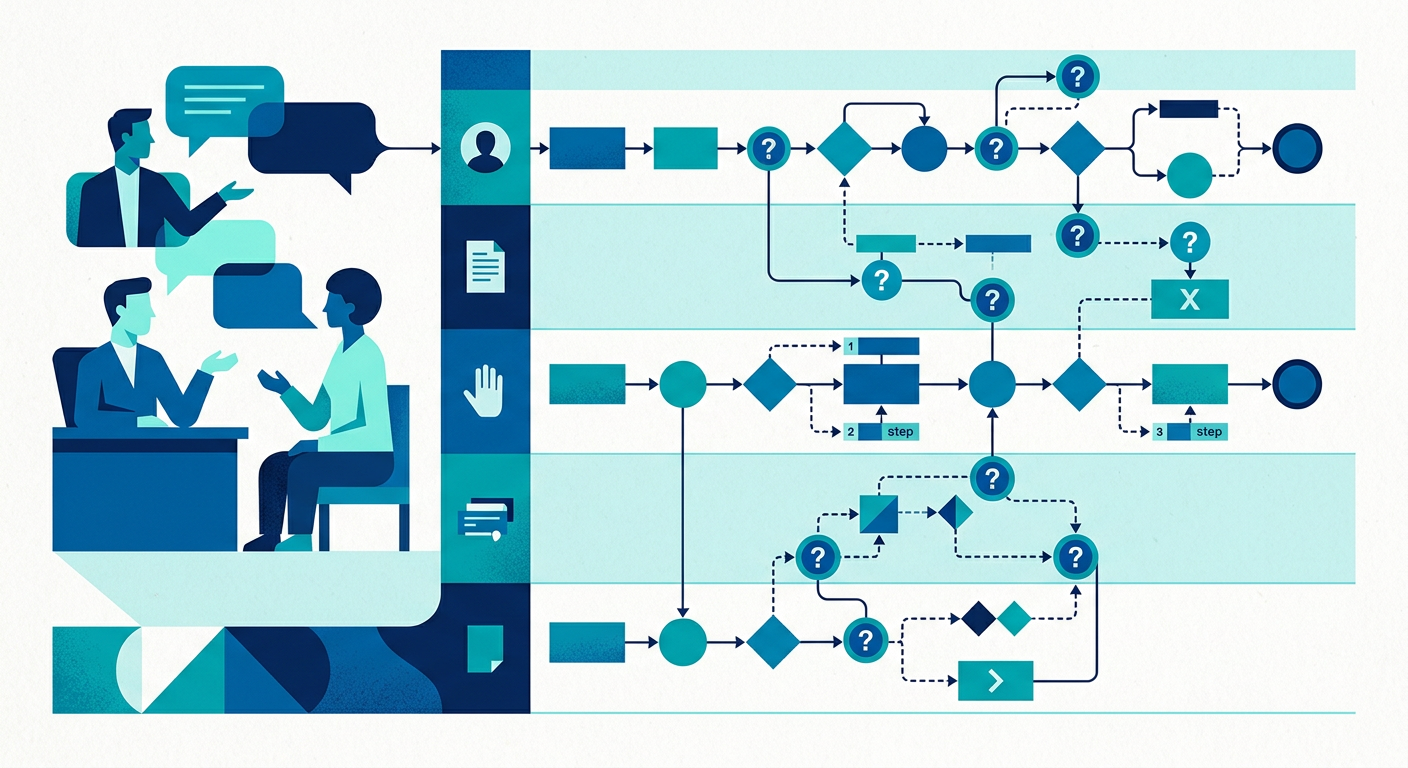
Twelve questions, asked in a fixed order about the last real piece of work, are enough to map most operational processes in a single sitting, because they ask for artefacts and interruptions instead of steps. This post lists those twelve questions and why that framing is what makes the map accurate.
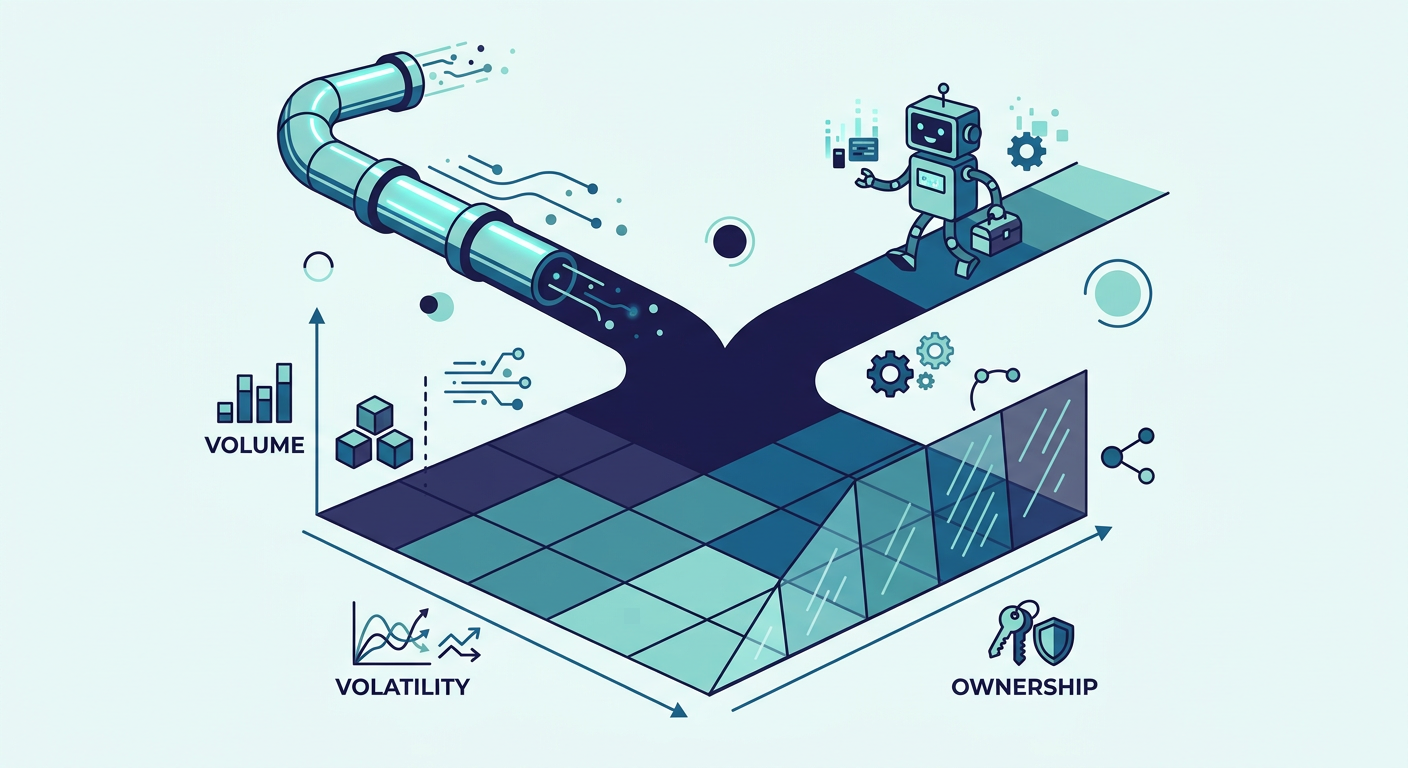
Choosing between an API and a bot for any given step comes down to three tests: how often the step changes, how many items it handles, and who owns the interface. This post walks through that decision test by step instead of defaulting to one mechanism for an entire process.